Lab Notes
✶ March 23, 2026 ✶
A new friend has been discovered ~ Meet Bethany, the microalga!
New Teachings: The Witch and the Microalga
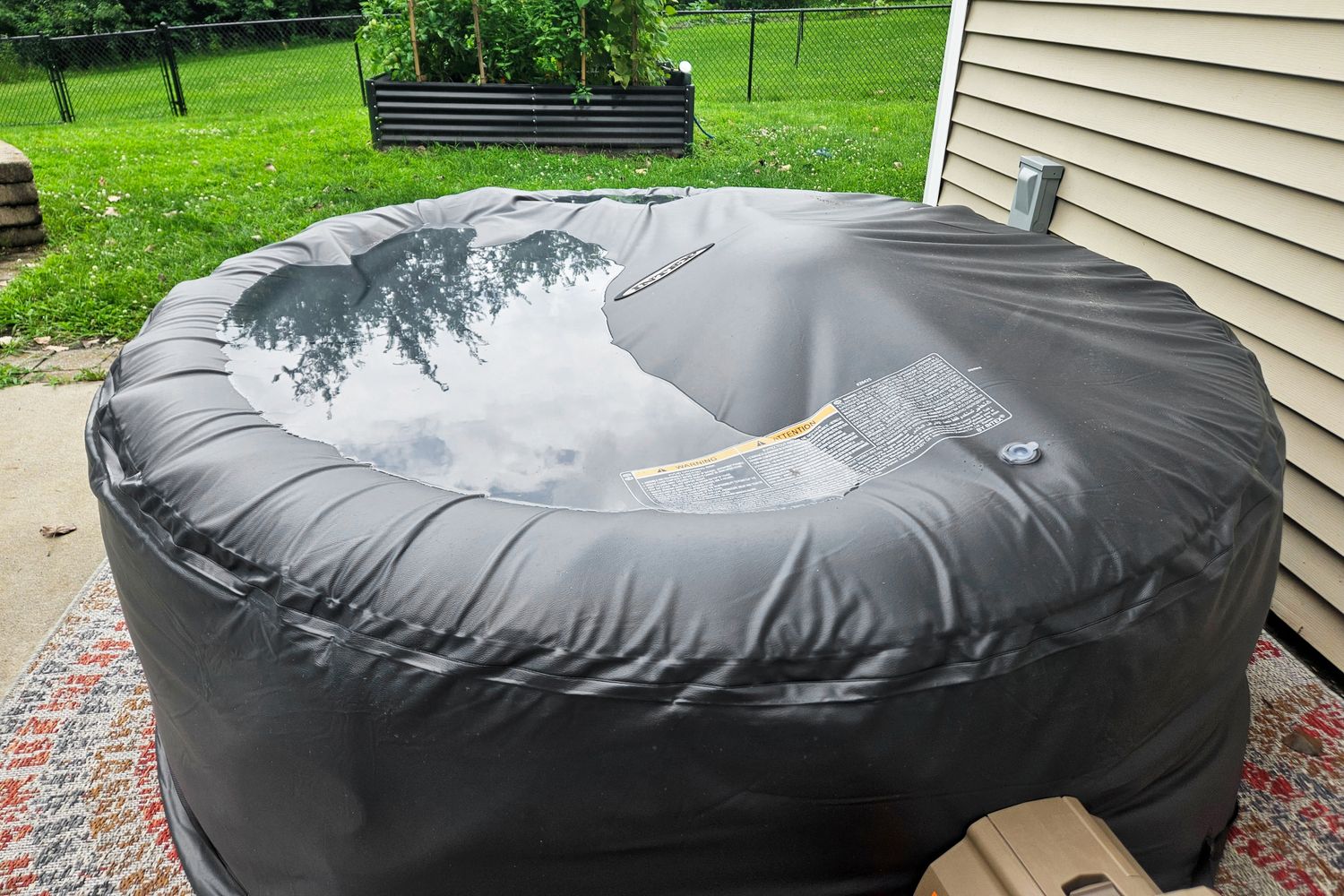
Apparently I'm not done playing with water... just kidding ~ I'll NEVER be done! Today we found some new friends in an unlikely location, the stagnant water laying atop my hot tub cover. This water accumulated from rain and snowfall over the winter, and now that spring has completly thawed the giant chunk of ice that it once was, I grabbed a sample! I wasn't expecting much due to the water having been collected independly from other sources, but there was still a lot of fun discoveries!
Experiments: Swift 380T Microscope @ 400x & 1000x magnification
| Organism | Observations | Photos |
|---|---|---|
Bethany the MicroalgaHaematococcus lacustris |
I had been waiting a while to play with this sample, and today was finally the day! I'd like to walk through the two main things I found: living microalga and resting cysts. Starting off, what I believe we have here is Haematococcus lacustris algae due to a number of factors. It was:
Also found in the same sample were a few clusters of resting cysts (red dots). This is the dormant stage of the algae when they're faced with unfavorable conditions (harsh UV, temperature, pH levels, etc.). To protect themseleves, they encase themselves in a sturdy and energy-reducing state to wait out these conditions. There were a few of these little buggers in the secondary palmella stage, where they begin to transition between the vegatative cell (active) and the red dormant mature cyst; however, I wasn't able to get a good focus on the one I saw, so there is no image for it. What I thought was really neat was the redness of the organism itself. All assuming I have the correct organism identified, this red coloring should be due to a high level of astaxanthin, which is a "potent, natural red-pigmented (carotenoid) antioxidant derived from algae, commonly found in salmon and shellfish, that protects cells from damage. It offers significant benefits for skin health (reducing UV damage and wrinkles), cardiovascular health, and eye strain, typically taken in doses of 4-18 mg daily" (WebMD). This would be roughly equivalent to ingesting 580 million to 1.4 billion Bethanys! (Please don't do this.) |
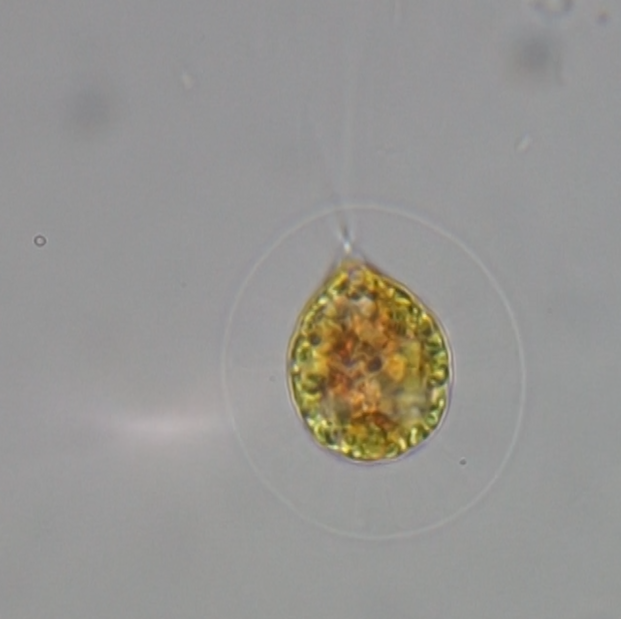
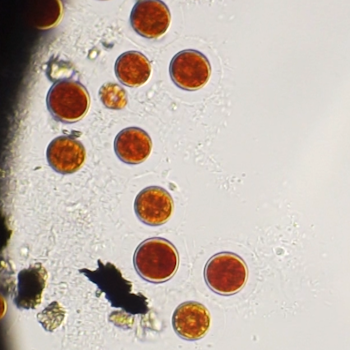
 |
Location of sample
Hot Tub Lid
*Random image from Better Homes & Gardens - I didn't want a photo of my yard, but the sample was indeed from the top lid of my inflatable hot tub.*