Lab Notes
✶ March 31, 2026 ✶
I made a sourdough loaf just to let it mold on purpose
New Bakings: The Witch and the Sourdough Mold
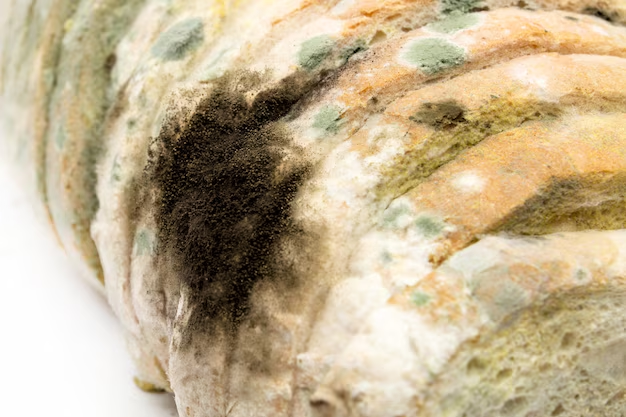
A few months ago, I finally got my sourdough starter to be a viable one where I've made a few loaves with it now. But with my minor (and totally manageable) bread addiction, I always consume said bread before letting it mold to slap under the microscope. However, through the power of forgetfulness, it finally happened! You'll see images below of both green and black mold formed on the bread. In my excitement for the mold, I did forget to take a picture of the bread itself to show what it looked like to the human eye, so that's my bad. But enjoy the findings regardless!
Experiments: Swift 380T Microscope @ 400x & 1000x magnification
| Organism | Observations | Photos |
|---|---|---|
Green Sourdough MoldPenicillium expansum |
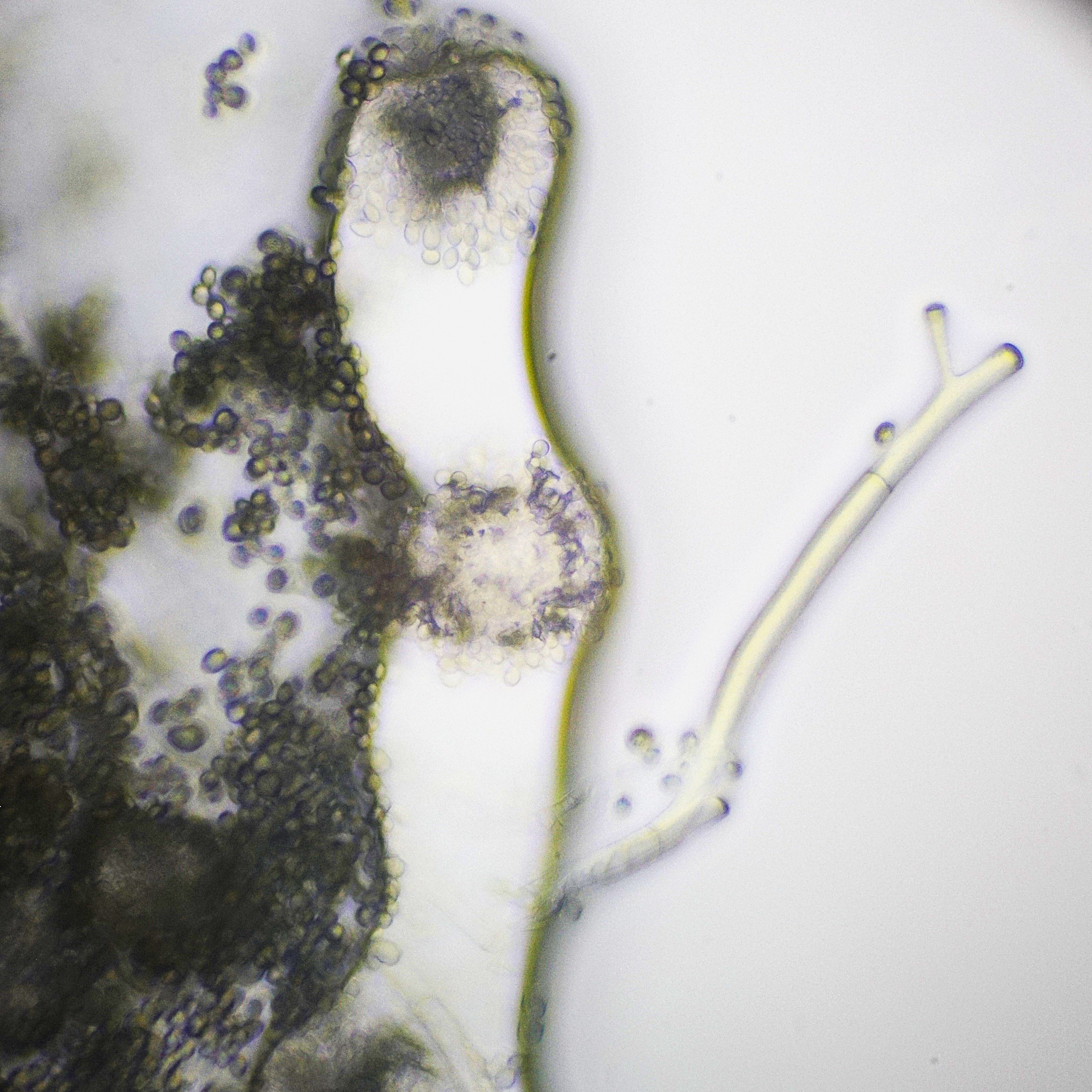
With the choices between the green and black mold to start, let's go with green. This mold was covering roughly 15% of the surface area of the bread loaf and was a bit fuzzy looking with a few white specs here and there. It's color reminded me of a medium-dark pastel green (maybe like a sage color). At first I didn't see much under the lense, but after zooming in to the 100x and 400x, it really started to take shape to the point where you can start to see the branches of fungi (hyphae) and the spores in a lot more clarity. These spores were absoltutely moving and grooving around, and you could see the tiny specs of bacteria mingling with the spores. Through some research, my best guess as to what this could be is Penicillium expansum due to how common this is on sourdough, it's coloring and texture, and the appearance under the microscope. I would love to afford the cost and space for a genome sequencer to see exactly what this is (and see if I'm right on previous/future findings) - but alas... Some cool things about this type of mold though, it's a type of psychrophile which means it can thrive in extreme, and even permanently, cold temperatures like the polar regions. It's also a common type of blue mold that can still appear as green-blue and is commonly found on fruit. Though it's also a common filamentous fungus found on spoiled bread, despite sourdough itself having a natural resistance to fungus due to the fermentation and baking process. It also produces mycotoxins, which causes immunotoxicity and neurotoxicity. (NIH.gov). |
|
Black Sourdough MoldAspergillus niger |
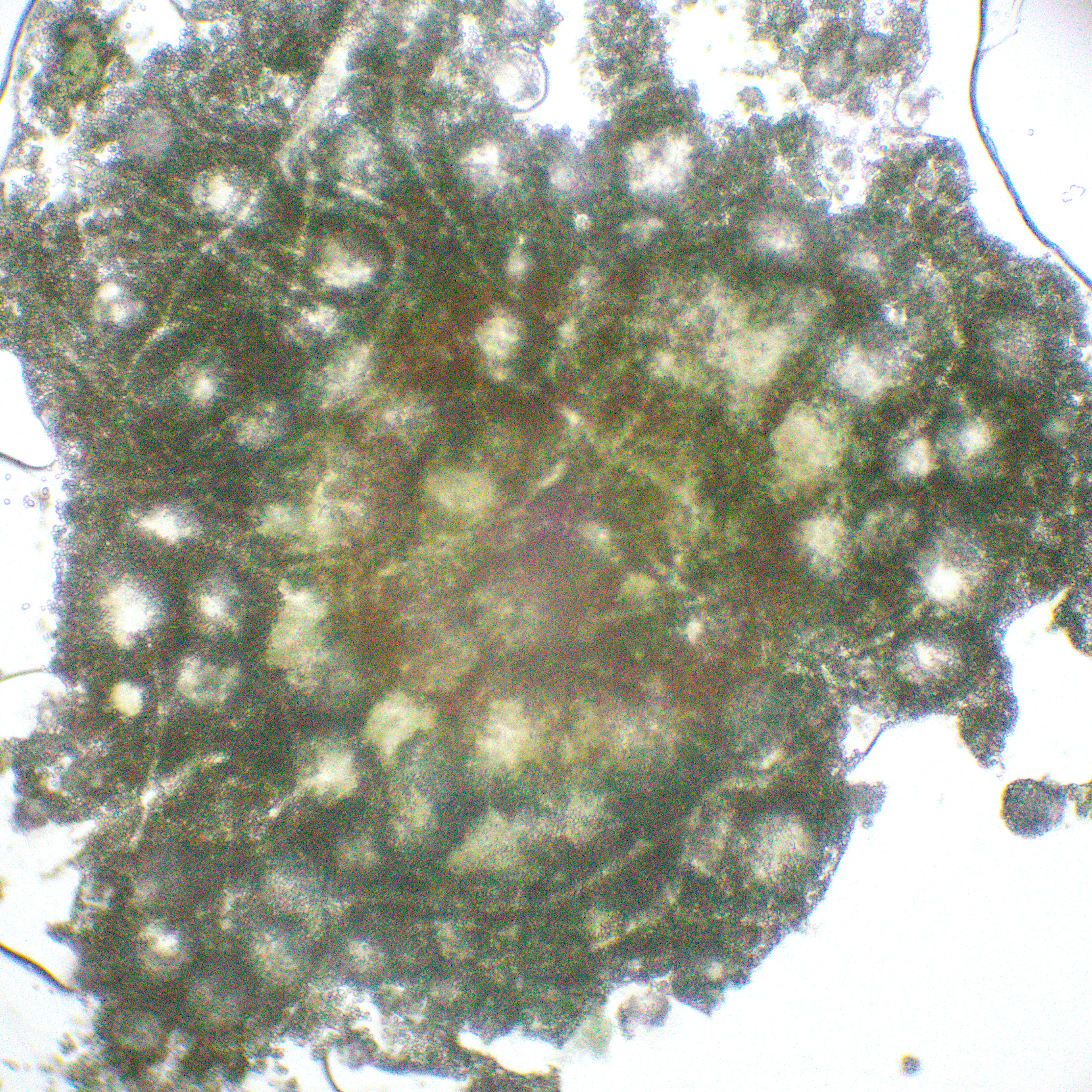
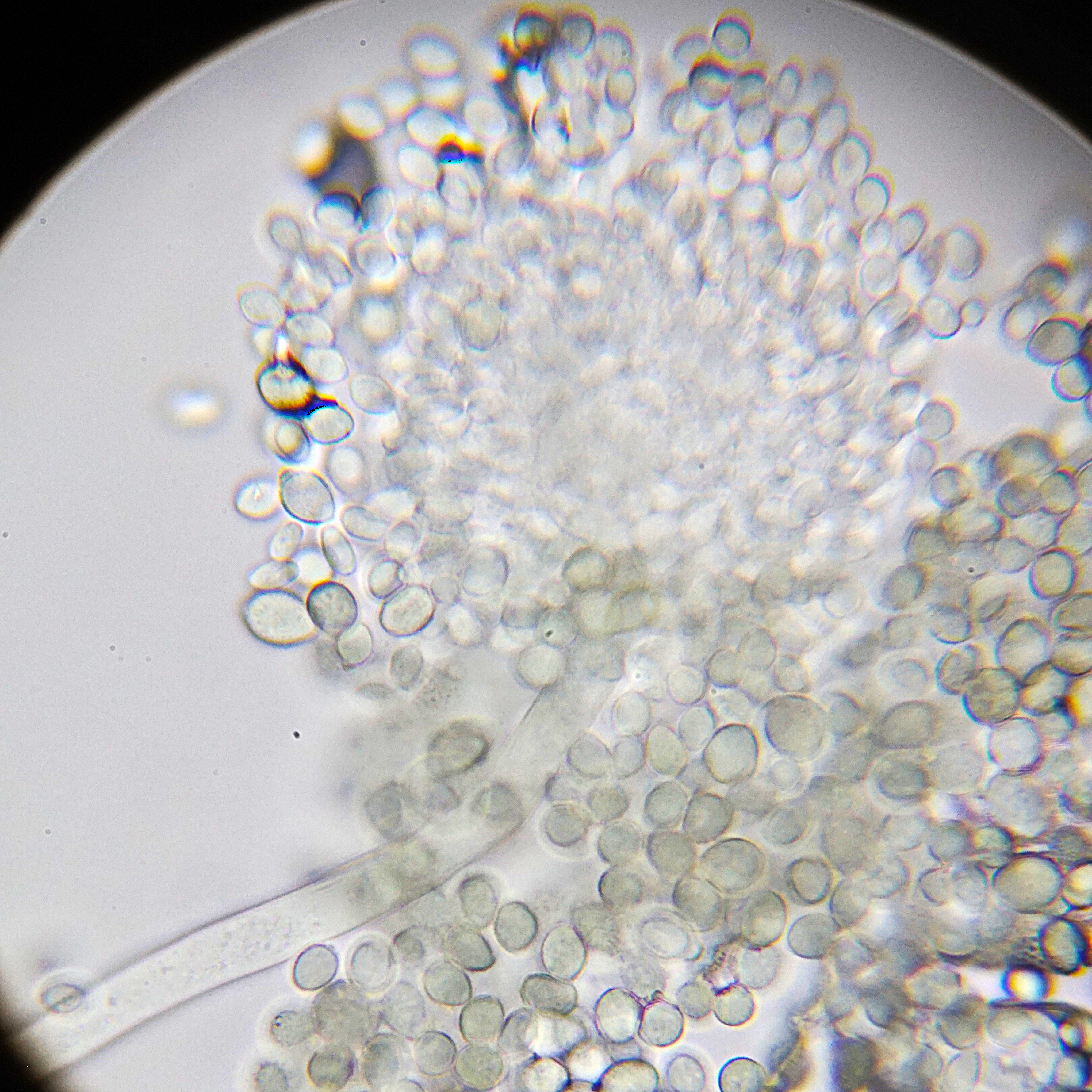
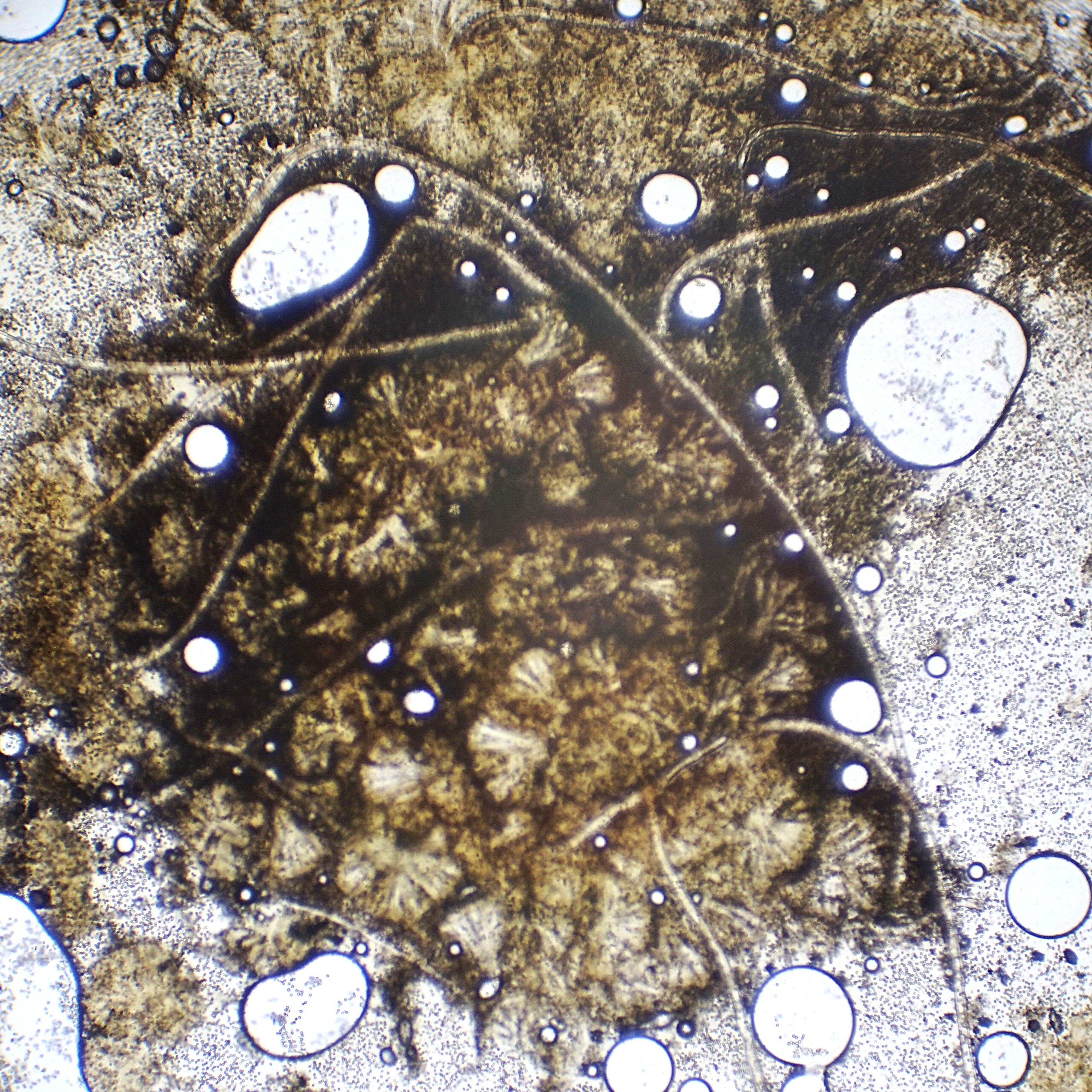
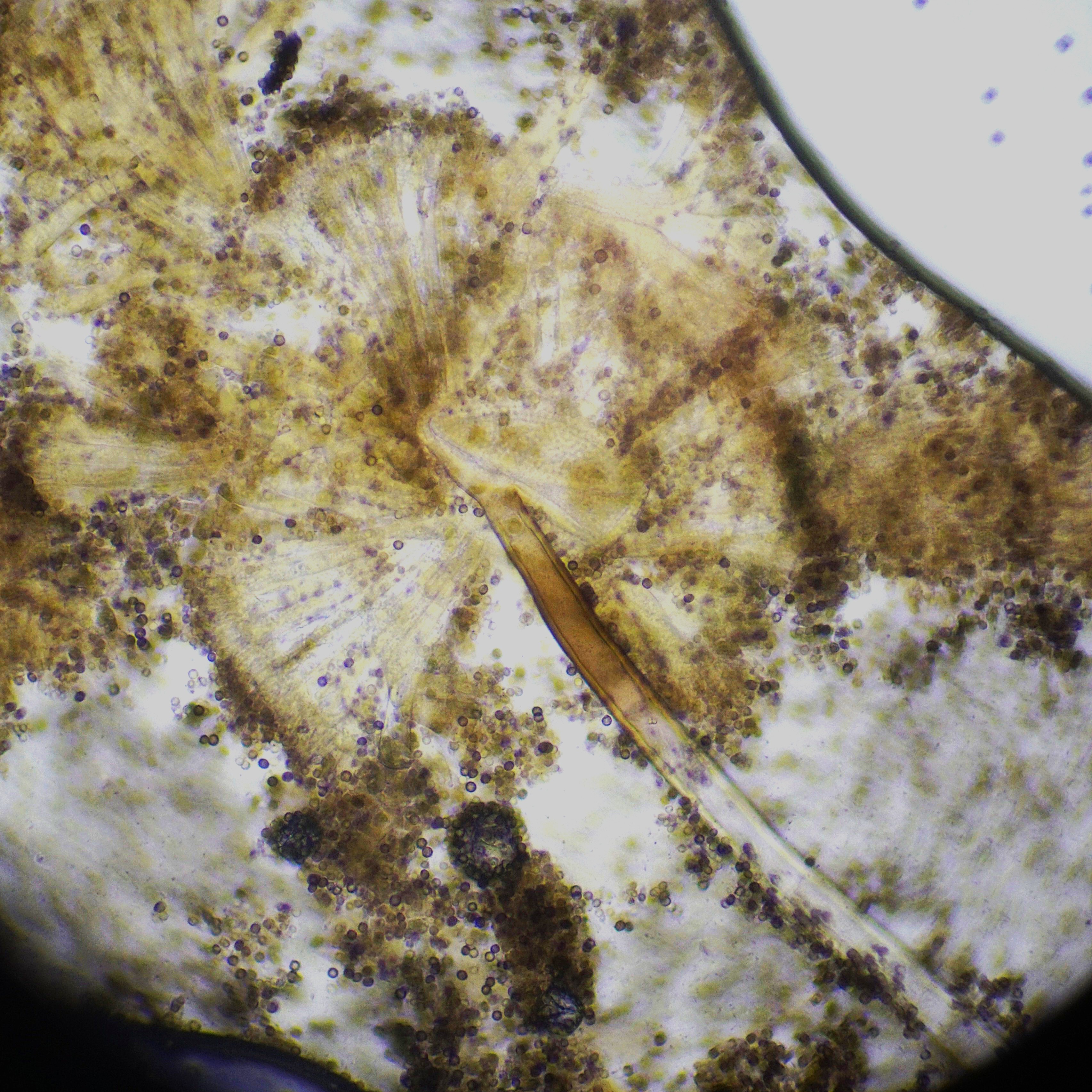
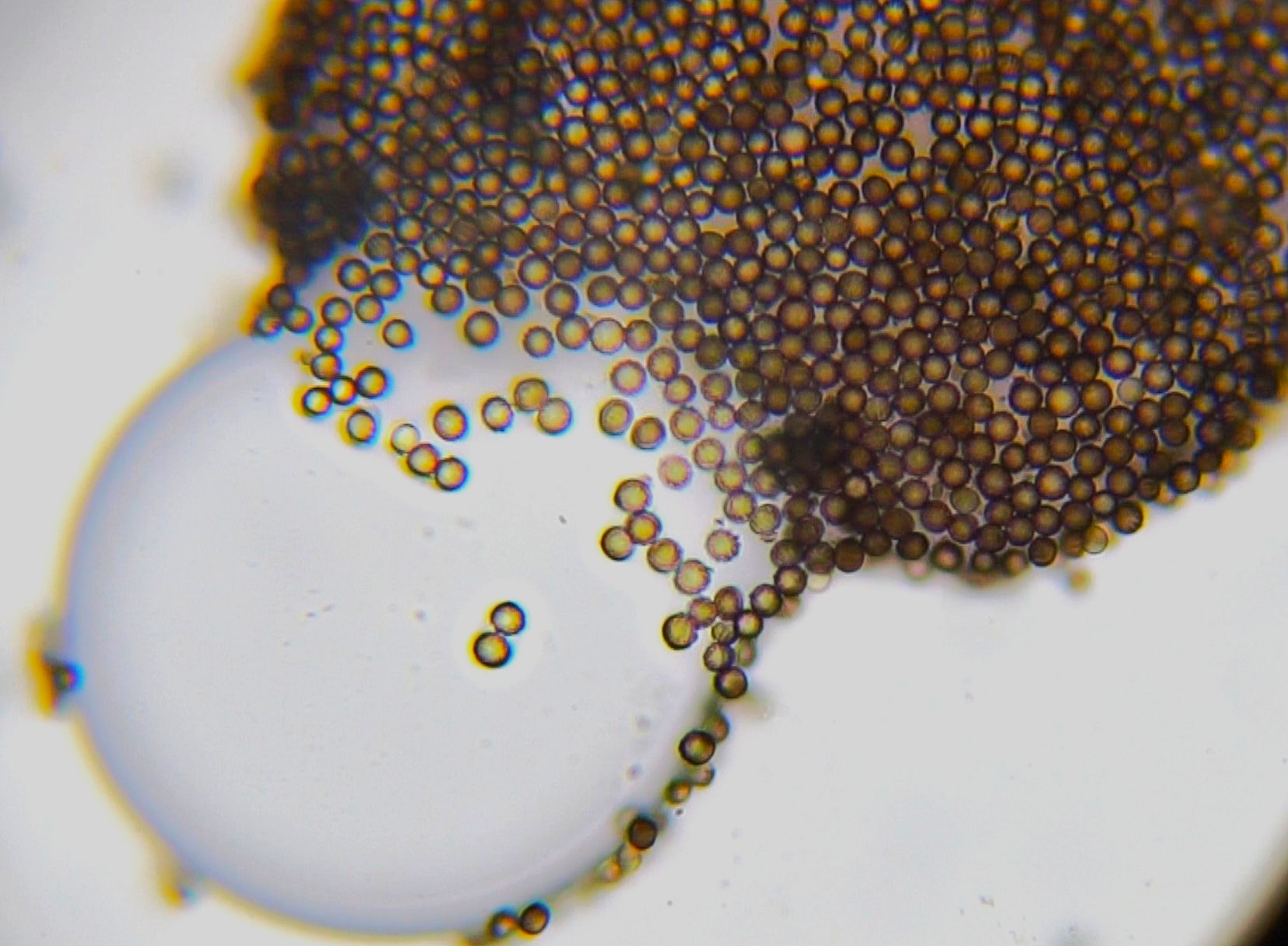
Next up is the black mold! Now if we thought the green mold can be scary due to the talk of toxicity, well do I have a treat for you! It's actually safer to consume and is actually approved by the US Food and Drug Administration to use in food production (please don't consume raw, however. It still produces toxins by itself). This mold was a rich black color that covered roughly 20% of the bread loaf and had a less fuzzy texture, and felt thicker when I scraped the innoculating loop against it. There wasn't necessarily a smell to it either, it just looked like it could make you sick from ingesting. Aspergillus niger is another common fungus found on bread and with it's color, texture, and microscope appearance, it seems like the most likely candidate. It's able to withstand extremly acidic environments and is used to make citric acid! Just like with the green mold, you can see a hypha stalk and its spores, along with a close up of what looks to be a cluster of spores attached to an air bubble through surface tension due to the nature of the wetmount I made for this. Now some more interesting things about Aspergillus niger: It's almost everywhere (soil, dust, decaying organic material, fruits, etc.), in addition to citric acid - used in candy, soft drinks, and other processed foods - it also is used to produce enzymes like glucoamylase, pectinase, phytase, and proteases (like for enthanol industries, fruit juice extraction, animal feed, cheese making, and laundry detergents!). |
|
Location of sample
Homemade Sourdough Loaf
*Not my photo - I forgot to get a picture of the bread before tossing it. But this one is very close to the same mold I was working with. Credit to: vladyslavhoroshevych @ Freepik.com*