Lab Notes
✶ April 19, 2026 ✶
Doing the dishes is lame. But looking at the sink is fun!
New Cleanings: The Witch and the Kitchen Sink
I'd like to start off by stating: If you choose to read this article, I want ZERO judgments for the state of my sink! As one could imagine, just like the previous post of dod droppings, there is a cornicopia of bacteria that live and visit a kitchen sink. Now, one question I do have, how different is the bacteria that live in the sink of a carnivore v. a vegetarian? Quite frankly, I don't have the answer for this. But it just came to mind. Perhaps I'll befriend a vegtarian just to get into their sink. Another day, maybe. For today, let's look at the metropolitan area that is my sink.
Experiments: Swift 380T Microscope @ 400x & 1000x magnification
| Organism | Observations | Photos |
|---|---|---|
Kitchen Sink BacteriaMoraxella catarrhalis |
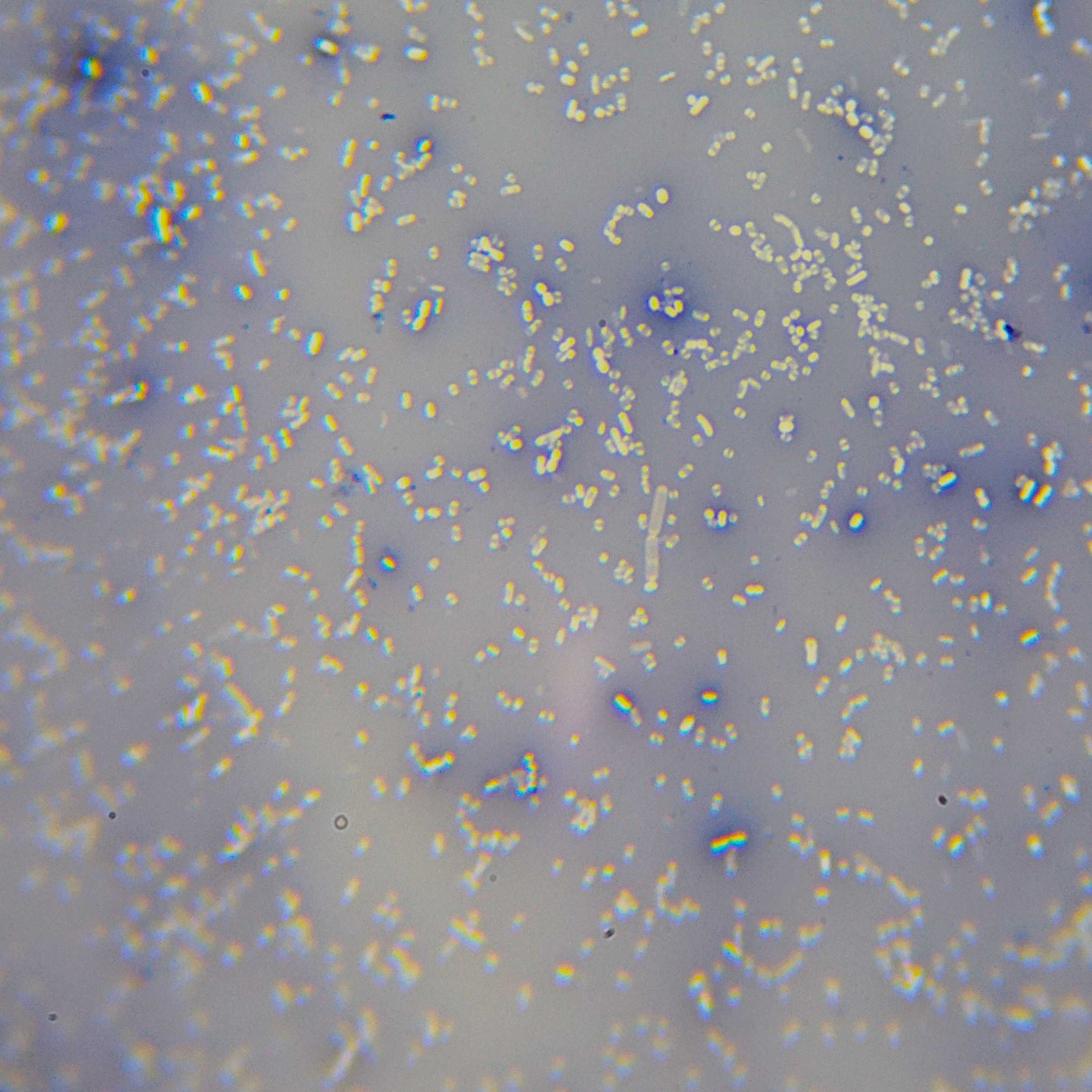
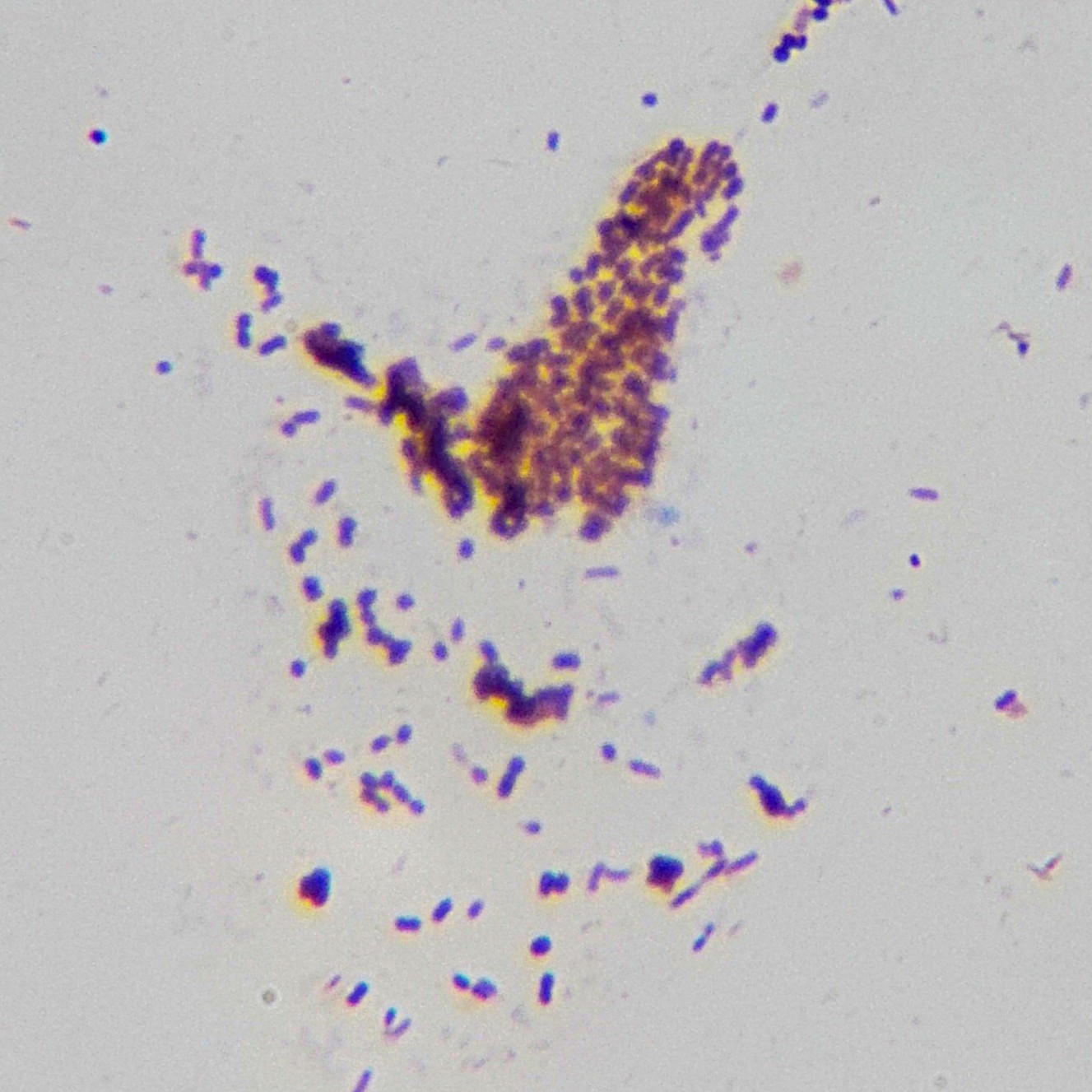
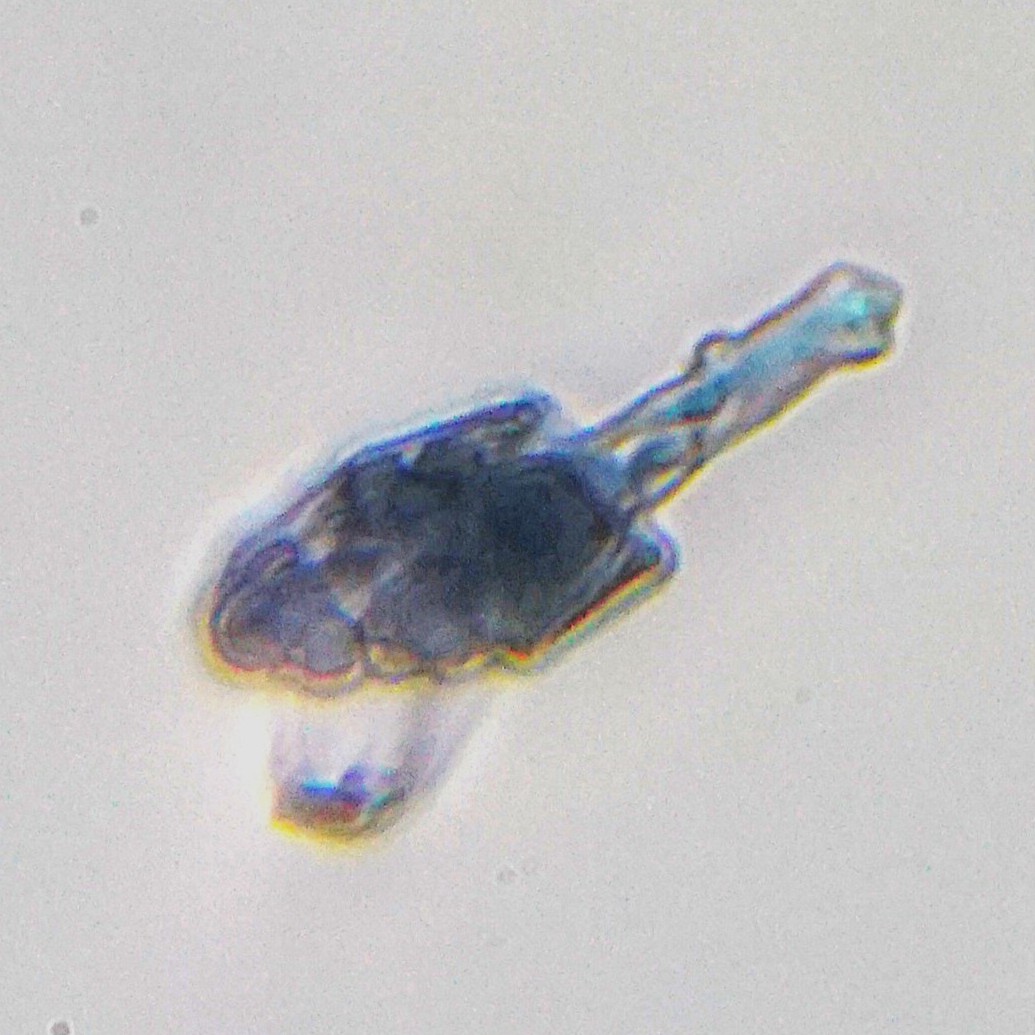
Let's just dive stright into this abosolute beast of sink. First, we have a negative stain to see more of the morphology of our bacterias. We have: diplococci, diplobacilli, and possibly streptococci. Now, since it shows a majority of diplococci, I'm going to base our main player around Moraxella catarrhalis. The fact that is was found in the sink and shows as a Gram-negative indicate that this is at least a high possibility. With the sink being a damp and nutrient-rich breeding ground, it's not surprising that we could find these here. Another thing to think about is that there are many Gram-positive bacteria here as well, and I could easily be getting them mixed up as they all sort of clump together. Luckily, this is a commensal bacteria that lives peacfully in the upper respitory tract of healthy humans. However, unluckily, it can become opportunistic to those with weakened immune systems or lung disease, in which case it can cause diseases like otitis media (middle ear infections) and sinusitis in children, and is a contribotor to bronchitis and pneumonia in children and adults. It can also exacerbate the symptoms of COPD (chronic obstructive pulmonary disease). So this isn't super great to have in my sink. Among the various types of bacter was a lot of biofilm as well. I feel like at 100x magification, this was all you saw. The nutrient-rich agar also did not form many colonies, and if I had used a BHI blood agar, this would have given better results (probably). Another fun thing found was the third image, which Google and ChatGPT both claim to be a type of rotifer (mushroom looking thing). However, if you compare it to other rotifers on Google Images, I'm simply not seeing the resemblence enough to say for 100% certainty that it's a rotifer. But, if it is, then cool! Another discovery! Now... it's time to seriously deep clean the sink! |
|
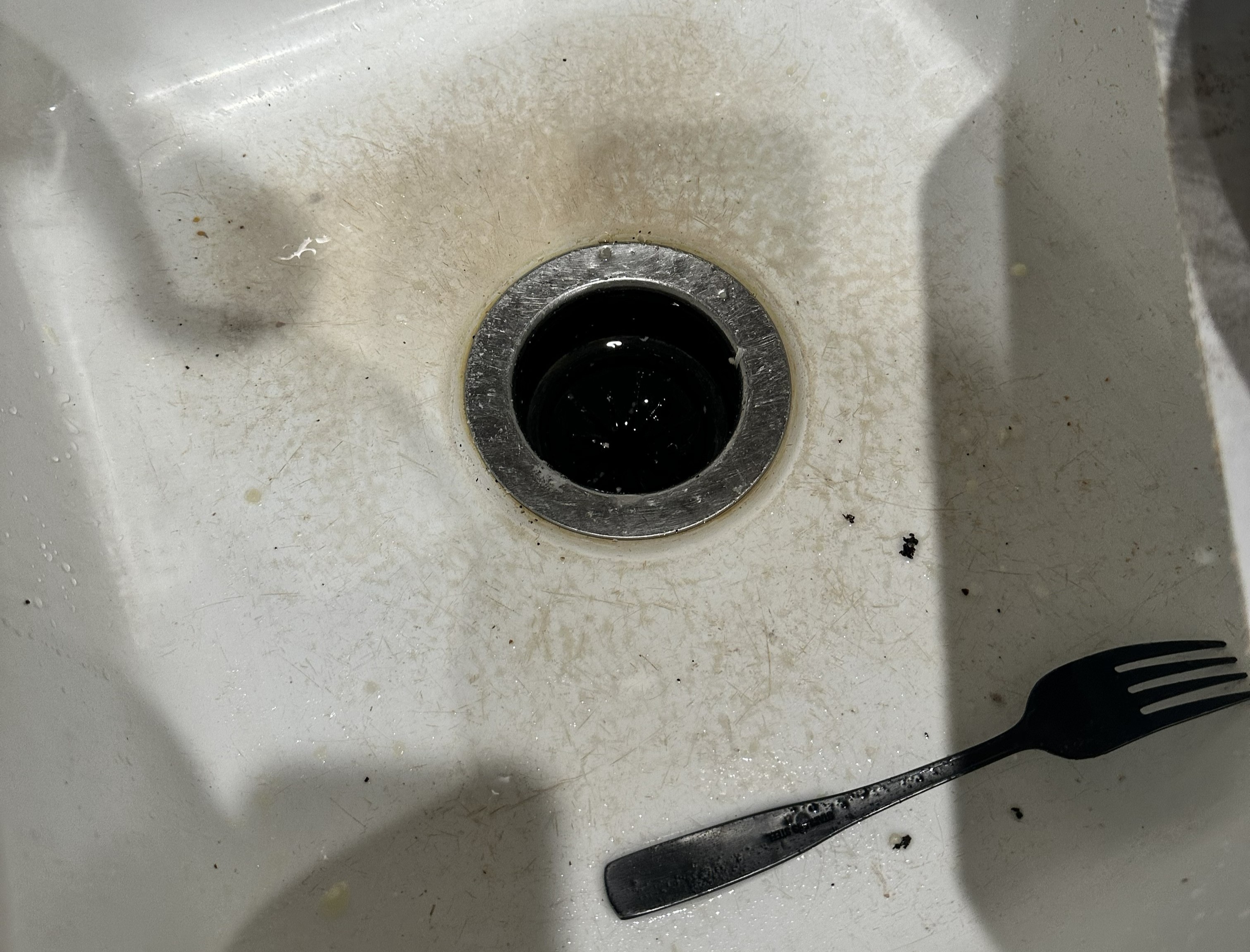
Location of sample
My Kitchen Sink
Fork for scale.